
USA Immigration
US Visa Interview Tips for Pakistani Applicants and Families
Practical US visa interview tips for Pakistani applicants preparing documents, answers, biometrics, refusal codes and CEAC status tracking.
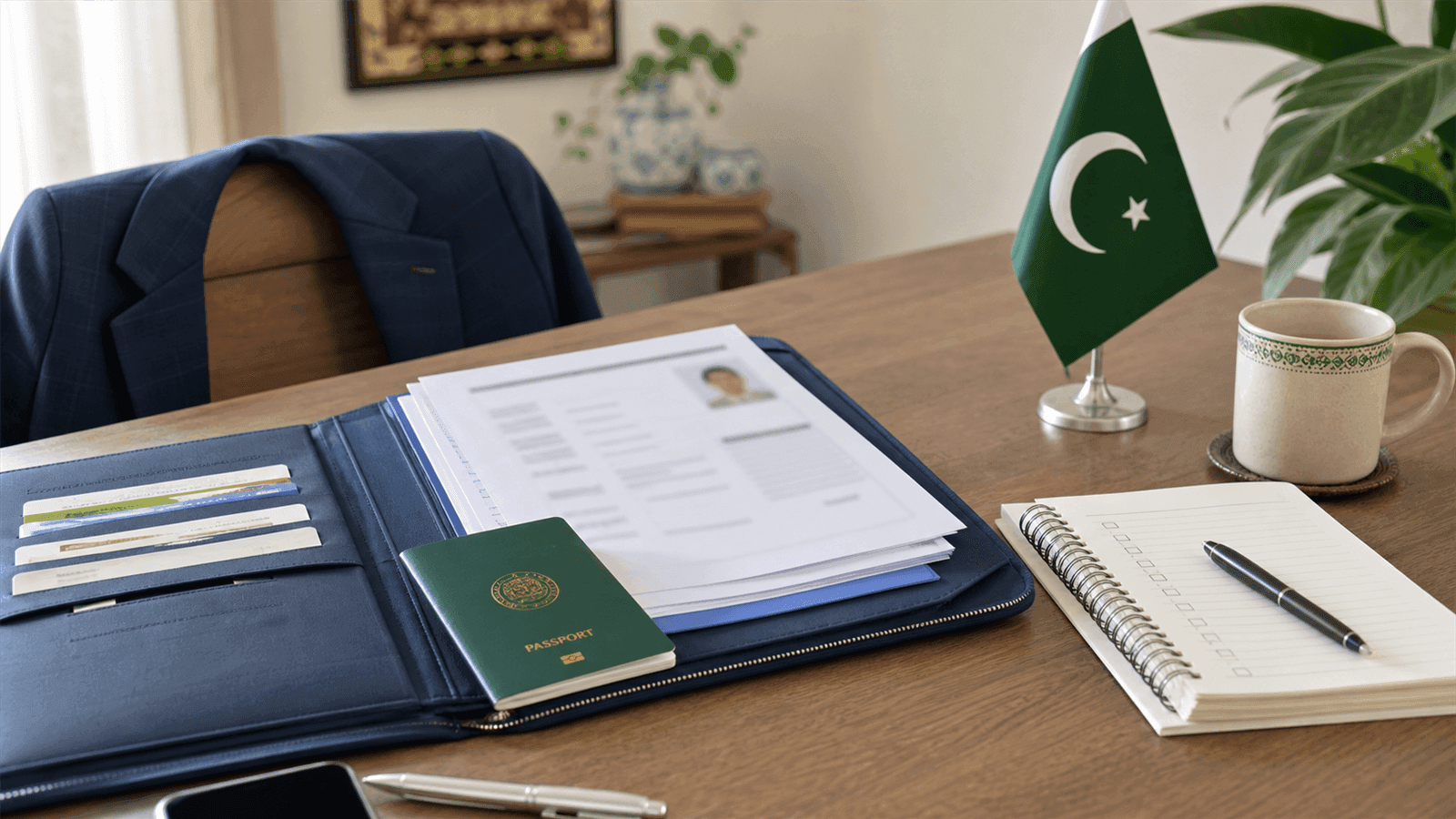
The US visa interview is usually shorter than people expect. Many applicants wait for hours and then speak to the officer for only a few minutes. That short conversation matters because the officer is checking whether your application, documents and answers fit together.
Good preparation does not mean memorizing a script. It means knowing your own case so clearly that you can answer simple questions without panic, exaggeration or confusion.
These US visa interview tips are written for Pakistani applicants preparing for visitor, student, work and family-based visa interviews. For the full process before the appointment, see the visa interview guide on Rehbaro.
Quick Answer
Before your US visa interview, review your DS-160 or DS-260, organize only relevant documents, understand your travel purpose, and prepare short honest answers. For temporary visas, be ready to explain why you are going, who will pay, how long you will stay, and what brings you back to Pakistan. If the officer issues 214(b), it usually means your temporary-visa eligibility was not established. If the officer issues 221(g), the case may need more documents or administrative processing.
Read Your Own Form First
Many refusals are not caused by one dramatic mistake. They come from small inconsistencies: a job title entered one way on DS-160, a different explanation at the window, and a bank statement that does not match the stated income.
Before the interview, read your submitted form from start to finish:
- Passport number and name spelling.
- Education and work history.
- Monthly income or business details.
- US contact information.
- Travel dates and purpose.
- Previous refusals or immigration history.
- Details of relatives in the United States.
If an agent filled the form, this step is even more important. You are the applicant. The officer will expect you to know what was submitted under your name.
Documents: Carry Proof, Not a Mountain
Take an organized folder, but do not treat document weight as a success strategy. Officers may not look at every paper. They ask questions first and request documents only when needed.
For visitor visas, useful documents may include employment proof, business registration, tax records, bank statements, invitation details, travel plan and family evidence. For students, keep your I-20, admission letter, funding proof, transcripts and test records ready. For work visas, carry the petition approval notice and employer documents. For immigrant cases, follow the National Visa Center and embassy checklist carefully.
Use simple dividers:
- Passport and appointment papers.
- Visa category documents.
- Financial evidence.
- Work or business evidence.
- Family and civil documents.
If the officer asks for a document, you should be able to find it in seconds.
How to Answer Interview Questions
Short, direct answers usually work best. If the officer asks "Why are you going to the US?", do not start with your entire life story. Answer the question first, then add one useful detail if needed.
Example for a visitor:
"I am visiting my brother in Houston for three weeks during my annual leave. I work as an accounts manager in Lahore and will return before the office audit in September."
Example for a student:
"I am going for a master's in data analytics at this university because the program has applied coursework in healthcare data, which connects with my current work experience."
The goal is not to sound clever. The goal is to sound accurate.
Common Questions for Pakistani Applicants
Visitor visa applicants may be asked:
- What is the purpose of your trip?
- Who are you visiting?
- Who will pay for the trip?
- What do you do in Pakistan?
- How long will you stay?
- Have you travelled outside Pakistan before?
Student applicants may be asked:
- Why this university?
- Why this course?
- Who is funding you?
- What will you do after graduation?
- Why not study the same subject in Pakistan or another country?
Family immigrant applicants may be asked:
- How are you related to the petitioner?
- When did the marriage or relationship begin?
- Who is the financial sponsor?
- Have you submitted the required civil documents?
The best preparation is not memorizing perfect lines. Write your own bullet answers, then practice saying them naturally.
Understanding 214(b)
For many temporary visas, US law starts with the assumption that the applicant may intend to immigrate unless they show otherwise. A 214(b) refusal generally means the officer was not satisfied that you qualified for the visa category or overcame that temporary-visa concern.
In practical terms, the officer may have doubted your travel purpose, finances, Pakistan ties, student plan or overall credibility. It does not always mean you are banned. You can reapply, but reapplying immediately with the same facts usually leads to the same result.
Before applying again, ask yourself:
- What has changed since the refusal?
- Is my travel purpose clearer?
- Are my work, income or family ties better documented?
- Did my form and interview answers create confusion?
Understanding 221(g)
A 221(g) refusal is different. It means the officer could not approve the visa at that point because something was incomplete or additional processing was needed.
There are two common situations:
- Missing documents: the officer gives instructions for submitting a document or information.
- Administrative processing: the case needs extra review before a final decision.
CEAC may show the case as "Refused" during this period, which understandably worries applicants. That status does not always mean the case is finally denied. Follow the written instructions from the embassy or consulate and use official inquiry channels if the case remains pending longer than expected.
Day-of Interview Checklist
Before leaving home, confirm:
- Passport and old passports.
- Appointment confirmation.
- DS-160 or DS-260 confirmation page.
- Fee receipt if required by your local process.
- One recent photo if the instructions require it.
- Category-specific documents.
- Phone numbers and address details written on paper.
Security rules usually restrict phones, electronics, bags and sealed items inside embassy or consulate areas. Check the current instructions for your appointment location before travelling.
What Not to Do
Do not argue at the window. Do not present fake documents. Do not hide relatives in the United States. Do not say you are going for tourism if your real plan is to work or study. Do not memorize answers written by someone who does not understand your life.
Also avoid over-answering. Nervous applicants sometimes keep talking after the officer has enough information, and that extra talking creates new confusion. Answer clearly, then stop.
Source Notes
Check official information before your appointment:
- Administrative processing guidance: https://travel.state.gov/content/travel/en/us-visas/visa-information-resources/administrative-processing-information.html
- Visa denials and refusal codes: https://travel.state.gov/content/travel/en/us-visas/visa-information-resources/visa-denials.html
- US Embassy and Consulates in Pakistan: https://pk.usembassy.gov
FAQs
How long is a US visa interview?
The actual conversation is often only a few minutes, although waiting time can be much longer. Prepare for the full appointment day, but practice giving clear answers quickly.
Should I answer in English?
Use the language you can answer in accurately and confidently. For many applicants English is fine; for others, asking for clarification or using simple language is better than pretending to understand a question.
Can 214(b) be overturned?
There is usually no simple appeal for a standard 214(b) visitor or student refusal. You can reapply, but the new application should address the weakness in the previous case.
Does 221(g) mean my visa is rejected forever?
No. A 221(g) case may later be approved if missing documents are submitted or administrative processing is completed successfully. Follow the written instructions exactly.
Final Thoughts
A good US visa interview feels ordinary: the officer asks a question, you answer the question, and your documents support what you say. Prepare seriously, but do not perform. The strongest version of your case is the truthful version told clearly.
Final check
Conclusion
- Practical US visa interview tips for Pakistani applicants preparing documents, answers, biometrics, refusal codes and CEAC status tracking.
- The US visa interview is usually shorter than people expect. Many applicants wait for hours and then speak to the officer for only a few minutes.
- Good preparation does not mean memorizing a script. It means knowing your own case so clearly that you can answer simple questions without panic, exaggeration or confusion.
Use a related tool
Run an estimate, then confirm serious decisions with qualified professionals.