
USA Immigration
Moving to USA Checklist: Packing, Customs and Your First 30 Days
A detailed moving to USA checklist covering carry-on documents, the CBP customs declaration form, the SSN application process, and the first 30 days after landing.
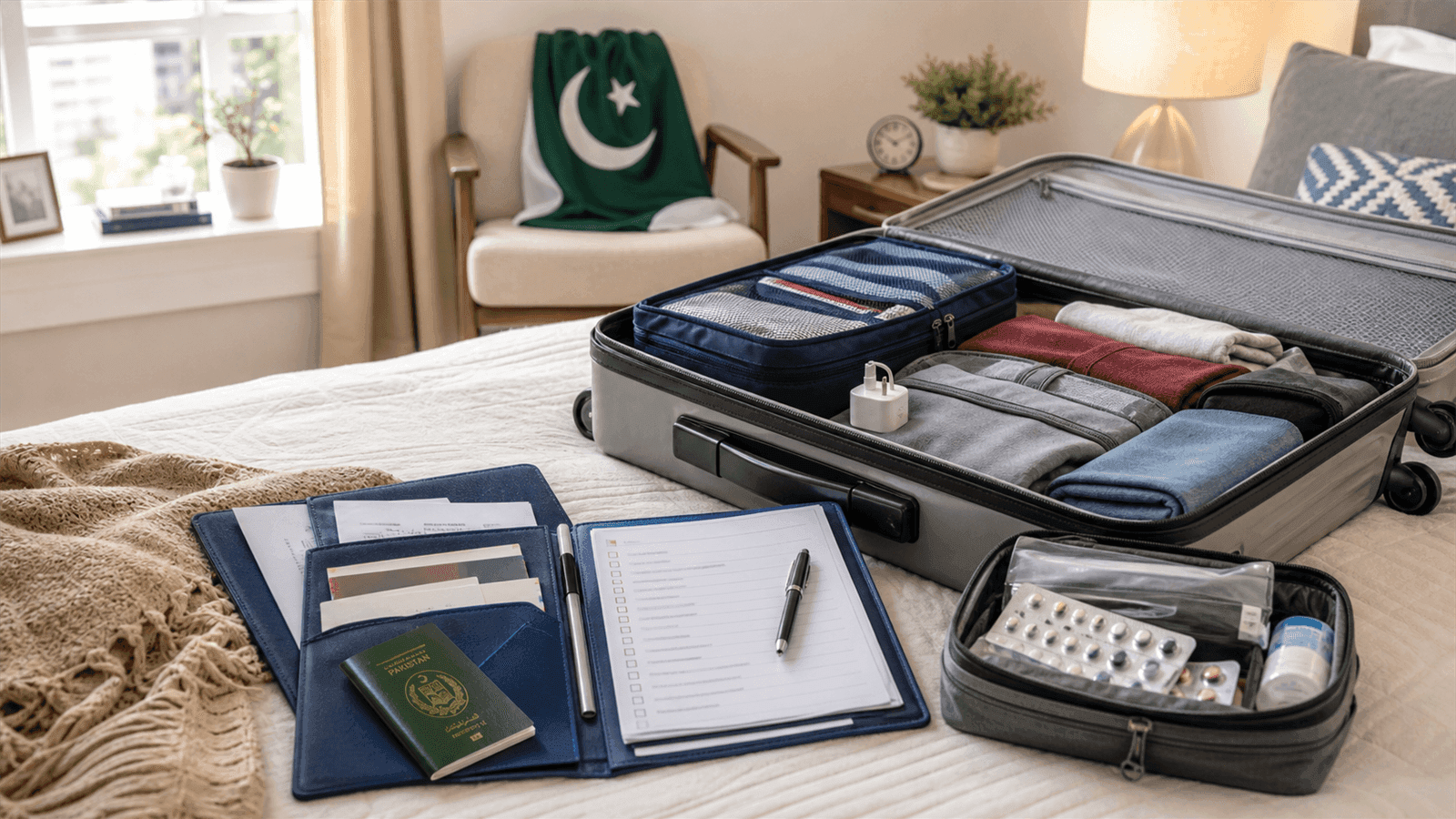
Moving to the United States, whether for study, work or joining family, involves more than packing suitcases. What you declare at customs, how you apply for a Social Security number, and the order you tackle housing and banking in all affect how smooth the first month feels.
This moving to USA checklist walks through packing, the actual customs declaration process, and settling-in steps with the specific forms involved. For deeper checklists by topic, the USA guide has dedicated pages for each stage.
Quick Answer
Keep documents, medicine and one change of clothes in your carry-on. On the plane or at a kiosk you will complete CBP Form 6059B, the customs declaration; if you are carrying more than 10,000 USD in cash or monetary instruments, you must also separately report it, since failing to declare amounts over that threshold can lead to seizure of the funds. After arrival, prioritize a Social Security number application (if your status is eligible), a bank account, and a phone plan, roughly in that order.
What to Pack in Your Carry-On
Never check your passport, visa, I-20, DS-2019 or petition approval notice. Keep these, plus a copy of every important document, prescription medicine in original packaging, and one change of clothes, in your carry-on. Immigration officers at the port of entry will ask for your documents immediately, so they need to be within reach, not buried in checked luggage that has not yet cleared.
See the full packing checklist for a complete breakdown by document, clothing and customs category.
Packing for the Right Climate
Climate varies enormously by US region. Moving to the Northeast or Midwest usually means preparing for genuinely cold winters, while the South and Southwest stay warmer most of the year. Rather than filling baggage weight with heavy winter clothing bought at home, many newcomers buy climate-specific gear locally after arrival, since specialized items like insulated coats are often better suited and reasonably priced once you know your actual daily routine and commute.
The Customs Declaration: CBP Form 6059B
Every arriving traveler completes CBP Form 6059B, the Customs Declaration, either on paper, through an app, or at an Automated Passport Control kiosk depending on the airport. It asks whether you are bringing food, plants, animal products, or currency and monetary instruments over 10,000 USD (or the foreign currency equivalent).
There is no legal limit on how much money you can bring into the country. The requirement is disclosure: amounts of 10,000 USD or more, combined across cash, travelers checks and similar instruments, must be reported. This is filed as a currency report in addition to the general customs declaration. Under-declaring is treated seriously and can result in the funds being seized and civil or criminal penalties, so if you are unsure of the exact total, declare on the higher side rather than guessing low.
Sealed, commercially packaged dry goods are usually fine in reasonable quantities, but fresh produce, meat, seeds and many dairy products are commonly restricted or prohibited. Declare anything uncertain on the form rather than risk a violation for an undeclared item that would have been allowed anyway.
Learn what to expect immediately after this step, the CBP officer interview, in the airport arrival guide.
Your First Week: Temporary Housing
Many newcomers start in short-term housing, a hotel, extended-stay apartment, or with a host or relative, while comparing neighborhoods and viewing apartments in person. US leases commonly ask for proof of income, a credit check and sometimes a guarantor, all of which are harder to produce without US credit history, so ask landlords directly what alternatives they accept for new arrivals, such as a larger security deposit.
Applying for a Social Security Number: Form SS-5
If your visa category authorizes work, applying for a Social Security number is one of the most useful early steps, since it underpins payroll, banking and building credit. The application is Form SS-5, filed free of charge at a Social Security Administration office, and it requires original documents (or copies certified by the issuing agency, not photocopies) proving three things:
- Age – typically your birth certificate.
- Identity – a current, unexpired document showing your legal name and either biographical details or a photograph, most often your passport.
- Immigration status – a current DHS-issued document such as Form I-94, I-551 (green card) or I-766 (Employment Authorization Document); students and exchange visitors often also need their I-20 or DS-2019.
Processing generally takes a few weeks once the application and documents are accepted, so apply as soon as you are eligible rather than waiting until it becomes urgent.
Bank Account and Phone Plan
Many banks will open an account with a passport, visa documents and proof of address even before a Social Security number arrives, though exact requirements vary by bank, so ask directly what they accept from new arrivals. A local phone number is useful quickly for maps, ride-hailing, banking verification codes and communication with your school or employer; prepaid plans are a flexible way to start before committing to a longer contract once you have a Social Security number for credit-based plans.
The settling-in guide covers this sequence, including building credit history with a starter or secured card once eligible.
Budgeting for the First Month
Set aside enough for a security deposit and first month's rent, basic household items, groceries and a buffer for the unexpected. Arrange health insurance as early as possible, since medical costs without coverage can be very high even for routine visits; students often have a mandatory university plan, while employer coverage may involve a short waiting period. See the cost of living guide for a realistic look at expenses by city type.
A Simple First-Month Checklist
- Confirm temporary housing before you land
- Keep documents and medicine in carry-on baggage, not checked
- Complete CBP Form 6059B accurately and declare any currency over 10,000 USD
- Apply for a Social Security number using Form SS-5 if your status is eligible
- Open a bank account and arrange a phone plan
- Arrange health insurance as soon as possible
- Start comparing longer-term housing options once you know the neighborhood
Source Notes
- CBP Form 6059B and currency reporting requirements: https://www.cbp.gov
- Social Security Administration, required identity documents: https://www.ssa.gov/ssnumber/ss5doc.htm
FAQs
Can I bring my own kitchen spices and dry snacks to the USA?
Sealed, commercially packaged dry goods are generally allowed in reasonable quantities, but fresh produce, meat and many dairy products are commonly restricted. Always declare food items honestly on CBP Form 6059B rather than assuming a small amount will not matter.
Is there really no limit on how much cash I can bring?
Correct, there is no cap on the amount, but 10,000 USD or more (including combined cash and monetary instruments) must be declared. Undeclared amounts over that threshold risk seizure and penalties even if the money itself was legally earned.
What documents does the Social Security office need from an international student?
Alongside a passport and birth certificate, students typically need their Form I-20 (F1) or DS-2019 (J1), plus evidence of on-campus employment authorization if that is the basis for applying, since students are not automatically eligible for a Social Security number without an authorized job.
Final Thoughts
A move to the United States goes more smoothly when the paperwork is treated as seriously as the packing list: know what CBP Form 6059B actually asks, understand the real currency reporting rule, and have the right documents ready for the SS-5 application. Work through the first month as a short, ordered checklist rather than trying to figure it all out on arrival.
Final check
Conclusion
- A detailed moving to USA checklist covering carry-on documents, the CBP customs declaration form, the SSN application process, and the first 30 days after landing.
- Moving to the United States, whether for study, work or joining family, involves more than packing suitcases. What you declare at customs, how you apply for a Social Security number, and the order you tackle housing and...
- This moving to USA checklist walks through packing, the actual customs declaration process, and settling-in steps with the specific forms involved.
Use a related tool
Run an estimate, then confirm serious decisions with qualified professionals.